What makes Windmill Green so Green?
COMMERCIAL, RETROFIT
We use cookies.
Cookie Settings
We use cookies on our website to give you the most relevant experience by remembering your preferences and repeat visits.
Strictly Necessary
Necessary cookies are absolutely essential for the website to function properly. These cookies ensure basic functionalities and security features of the website, anonymously.
Analytical or performance
Analytical cookies are used to understand how visitors interact with the website. These cookies help provide information on metrics the number of visitors, bounce rate, traffic source, etc.
Functionality or appearance
Functional cookies help to perform certain functionalities like sharing the content of the website on social media platforms, collect feedbacks, and other third-party features.
No results found
COMMERCIAL, RETROFIT
Client
Location
Size
Status
Sector
Discipline
After standing empty for seven years, with plans already approved for demolition and a 17-storey tower, the 1970s building at Windmill Green has been saved and reimagined through retrofit rather than replacement. The team was commissioned by FORE to retain and extend the existing concrete frame to create a next-generation workspace. The result is what happens when low carbon design meets a strong social impact strategy: Manchester’s first multi-let BREEAM ‘Outstanding’ office and one of its most cycle-friendly workplaces.
Yvette Hanson, Principal Director
You must accept functionality cookies to view this content.
The 1970s office building at Windmill Green in the centre of Manchester had been vacant for seven years by the time workplace developers, FORE acquired the prestigious site, next to two of the city’s landmark buildings: the Midland Hotel and Manchester Central Convention Complex. During that time, several redevelopment proposals had been planned, but most involved demolishing the structure and replacing it with new-build towers. Planning consent had already been secured for a 17-storey scheme, seemingly clearing the way for a conventional high-rise development.
Instead, FORE chose to reject demolition and commit to a retrofit strategy that would retain and repurpose the existing concrete frame. The decision preserved the building’s embedded carbon and significantly reduced the environmental cost associated with new construction, as well as respecting the unique context. We were appointed to reconfigure and extend the retained structure to deliver 80,000 sqft of office space. The design approach focused on adaptability, sustainability and long-term value, aligned with environmental and social priorities. A deep refurbishment followed, including a new high-performance façade and upgraded building services designed to meet contemporary efficiency standards.
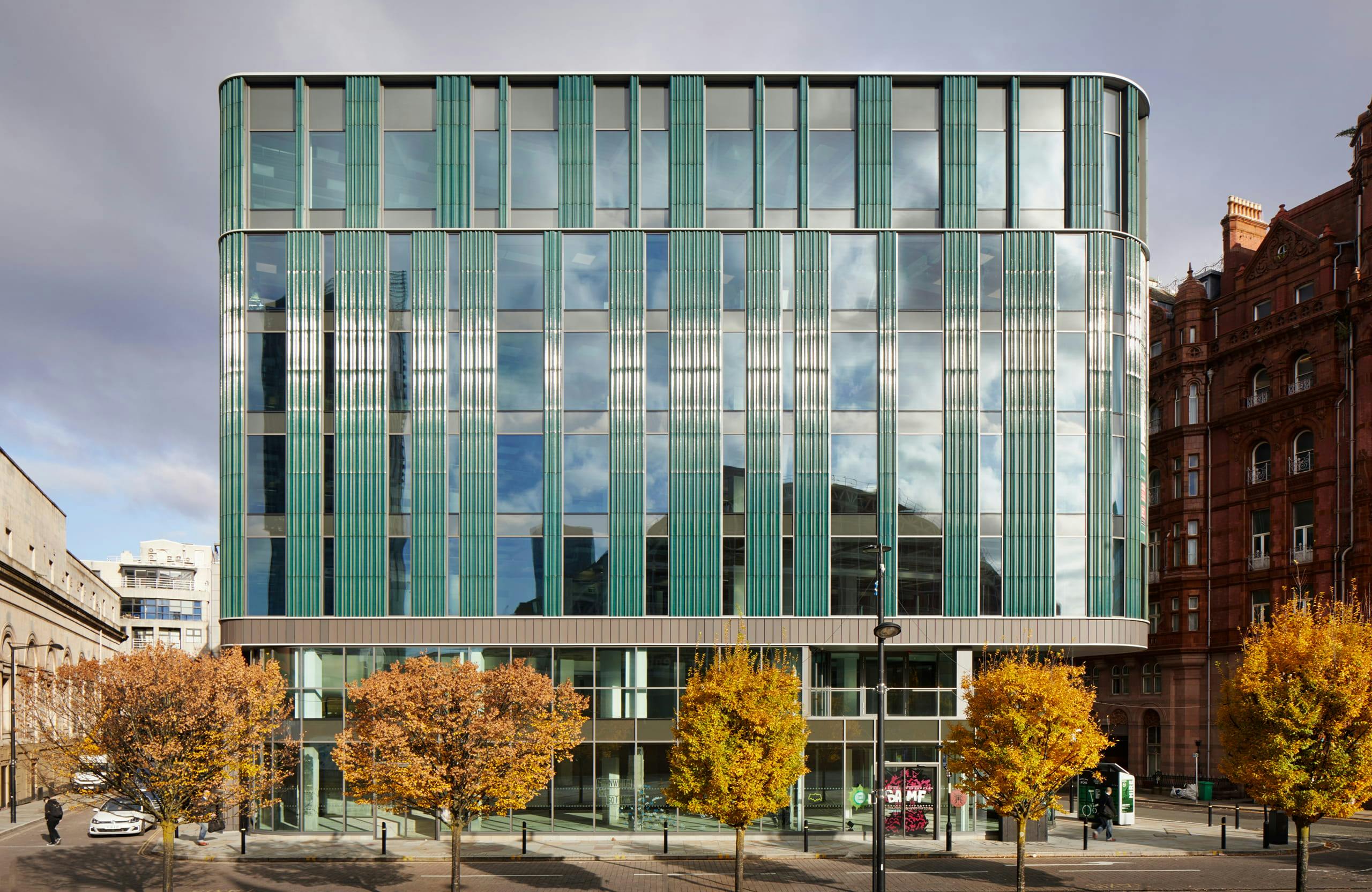
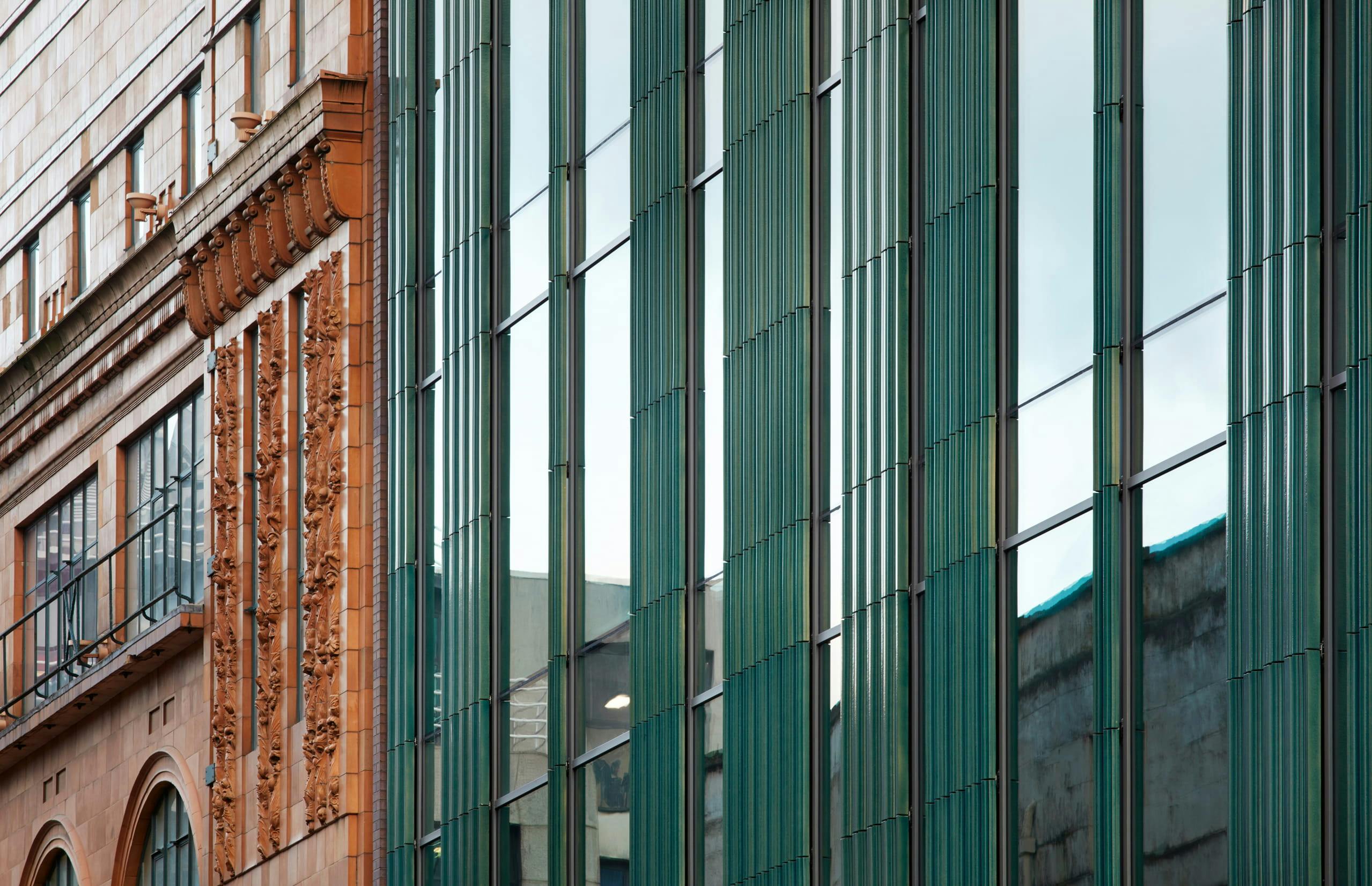
The architecture reflects the building’s prominent location, establishing a fresh new identity while responding to the constraints and opportunities of the original structure. The façade curves around the corner, combining bands of bottle green terracotta tile with full-height glazing.
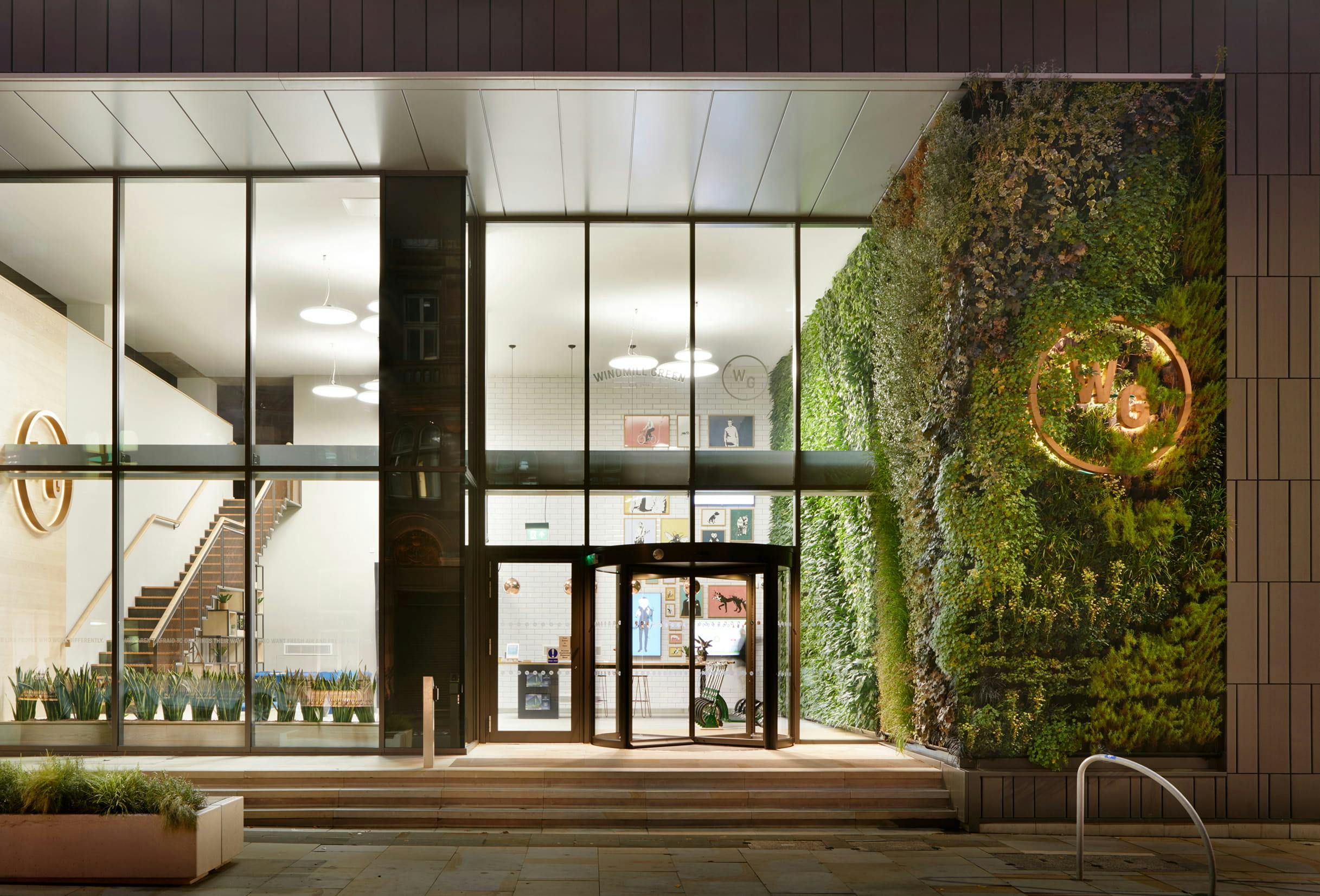
A living wall at the entrance welcomes visitors and a feature staircase between ground and first floor reduces pressure on the lifts. At the top of the building, a pavilion opens onto a large communal roof terrace with planting, beehives and views over the iron trusses of the former Central Station, railway arches and city towers beyond.
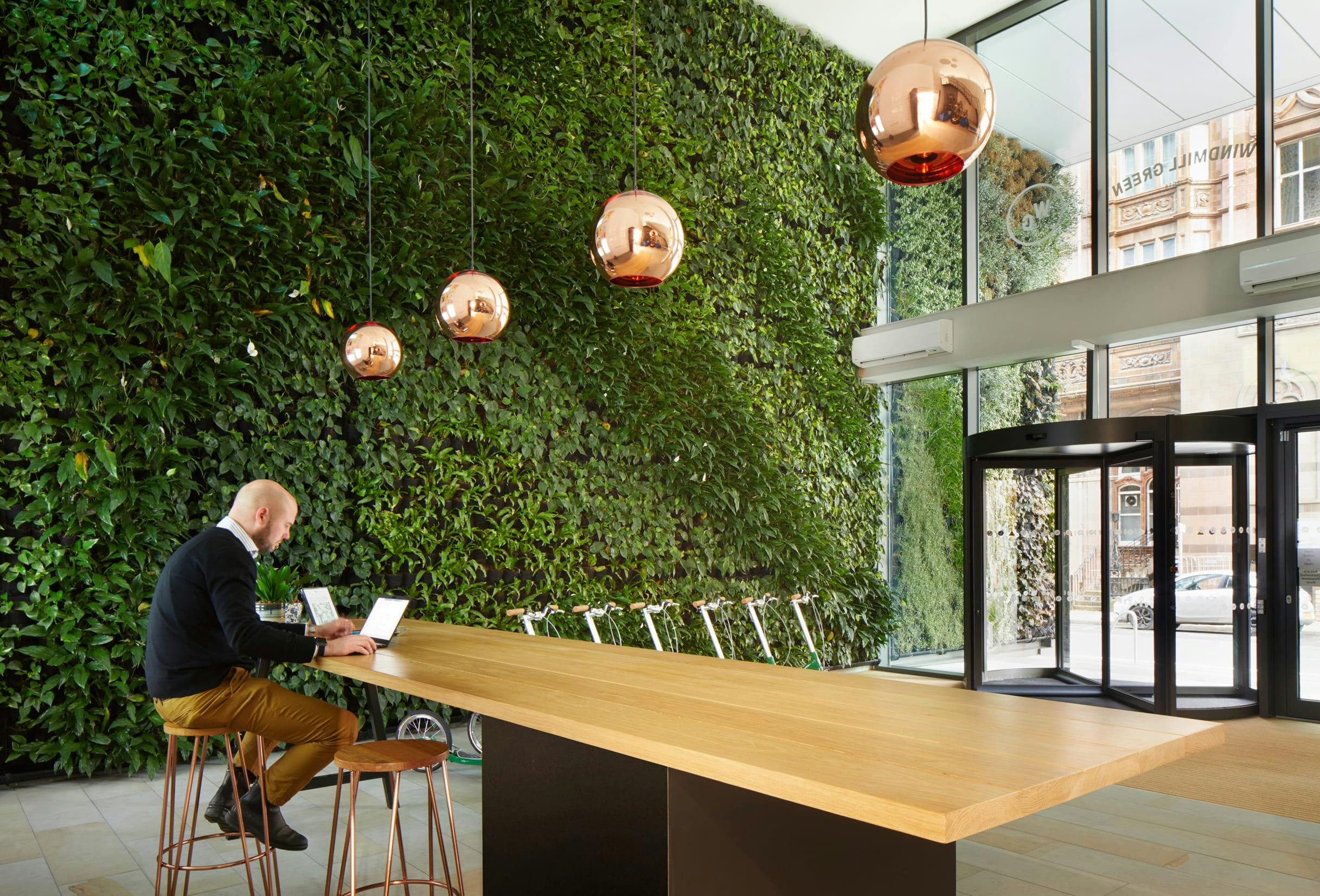
Windmill Green established itself as the benchmark for sustainable refurbishment in Manchester. It’s the city’s first multi-let office to achieve a BREEAM Outstanding rating and was recognised by CycleScore as Manchester’s most cycle-friendly workplace, as well as being awarded WiredScore Platinum status for digital connectivity.
The project is a provocation to the industry to look again at empty commercial buildings and to imagine how they might be transformed with similarly bold sustainability targets, without resorting to wholesale replacement.