A workplace tuned to sound
Workplace
We use cookies.
Cookie Settings
We use cookies on our website to give you the most relevant experience by remembering your preferences and repeat visits.
Strictly Necessary
Necessary cookies are absolutely essential for the website to function properly. These cookies ensure basic functionalities and security features of the website, anonymously.
Analytical or performance
Analytical cookies are used to understand how visitors interact with the website. These cookies help provide information on metrics the number of visitors, bounce rate, traffic source, etc.
Functionality or appearance
Functional cookies help to perform certain functionalities like sharing the content of the website on social media platforms, collect feedbacks, and other third-party features.
No results found
Workplace
Client
Location
Size
Status
Sector
Discipline
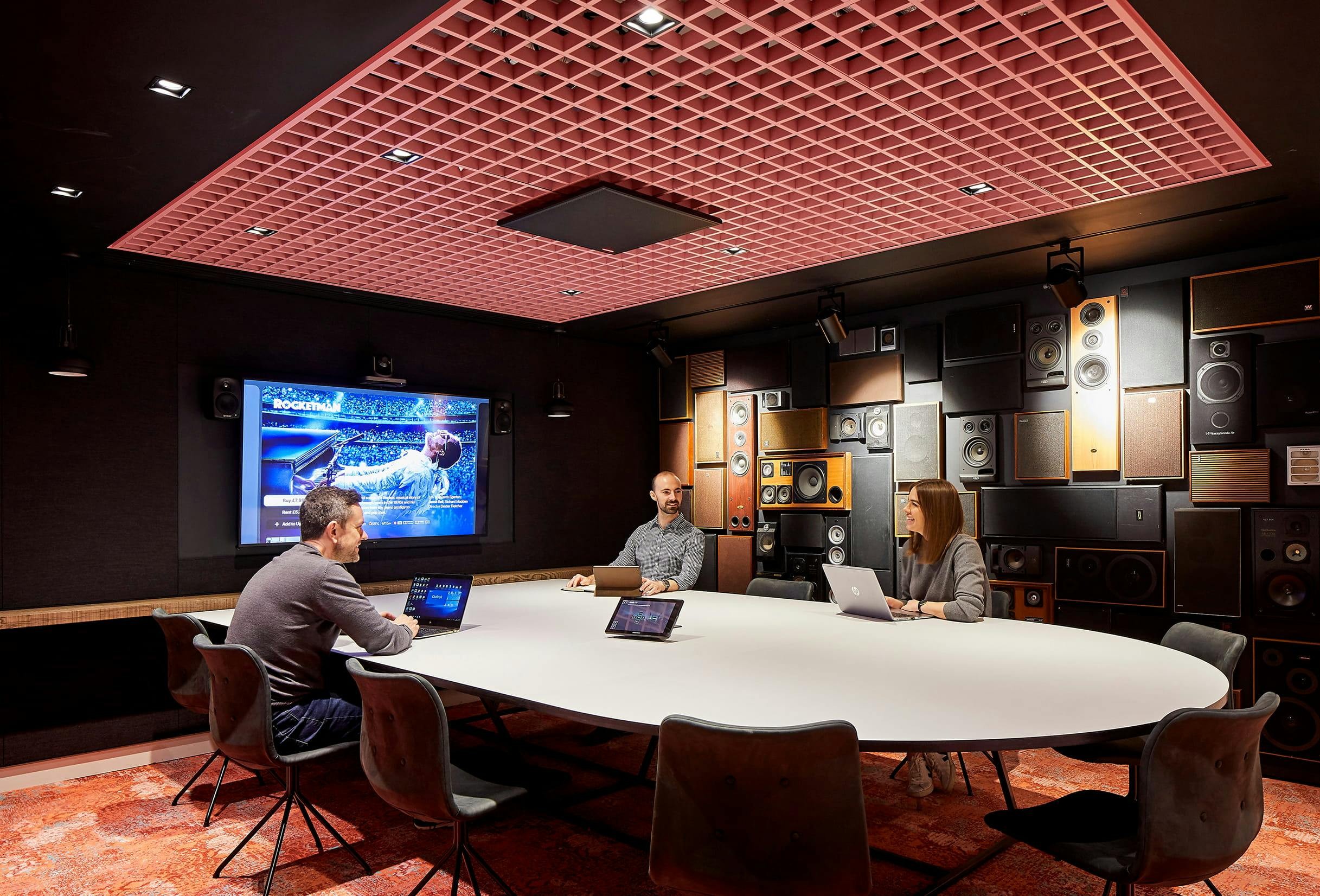
From its 200-capacity live venue to the listening rooms, recording suites and ‘rhythm and brews’ café, audio is central to the experience of Spotify’s offices; a constant, playful reminder of the company’s mission. The design navigates the challenge of working in an iconic Art Deco building, moderating its different volumes, integrating advanced technical infrastructure and creating spaces that amplify Spotify’s unique culture.
Shane Kelly, Principal Director
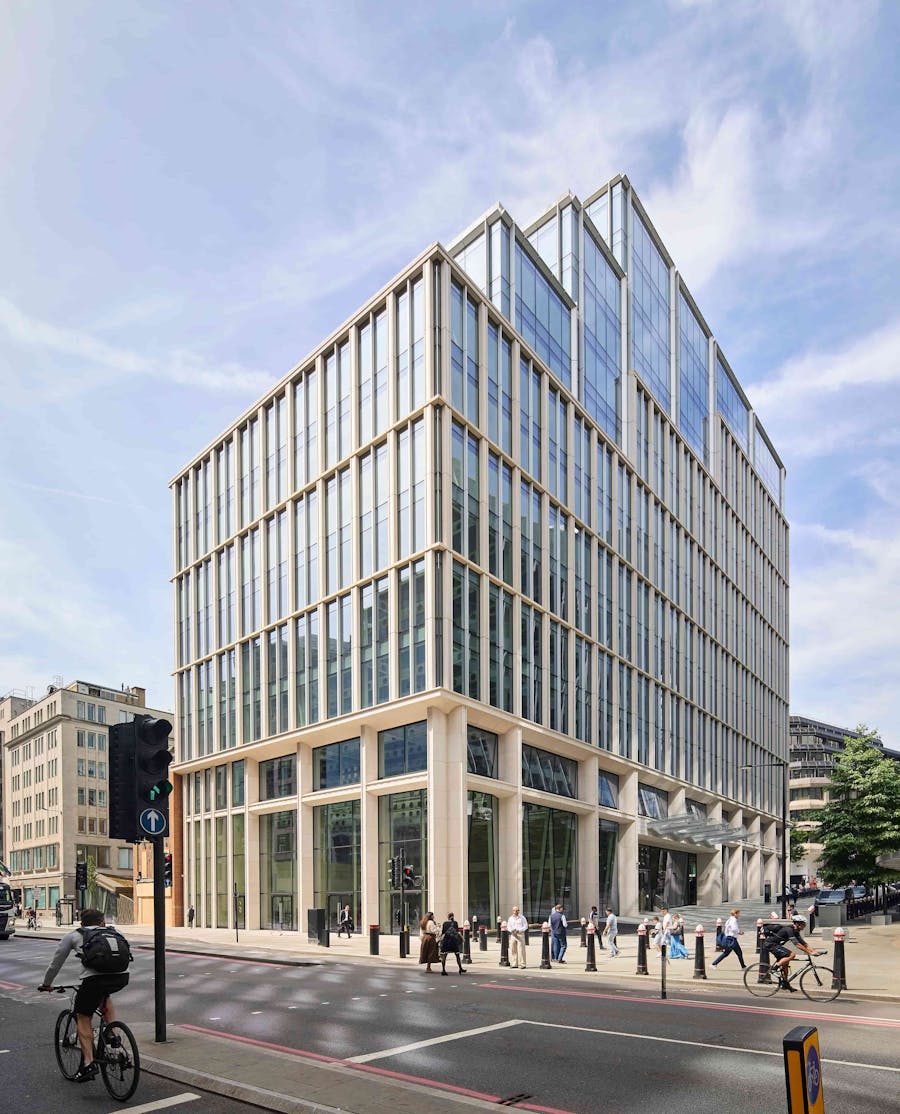
Spotify’s London headquarters occupies five floors of the Grade II-listed Adelphi Building, an imposing Art Deco landmark on Savoy Place, close to Embankment and the river. The project has transformed a partially demolished historic structure into a workplace that reflects Spotify’s culture of creativity, collaboration and experimentation, while accommodating complex technical and production requirements.
The approach also treads a careful balance between brand visibility and the discreet security needed for confidential work and VIP artist activity. The brief was to create a workplace that supports Spotify’s values, where employees, artists and partners would all feel welcome.
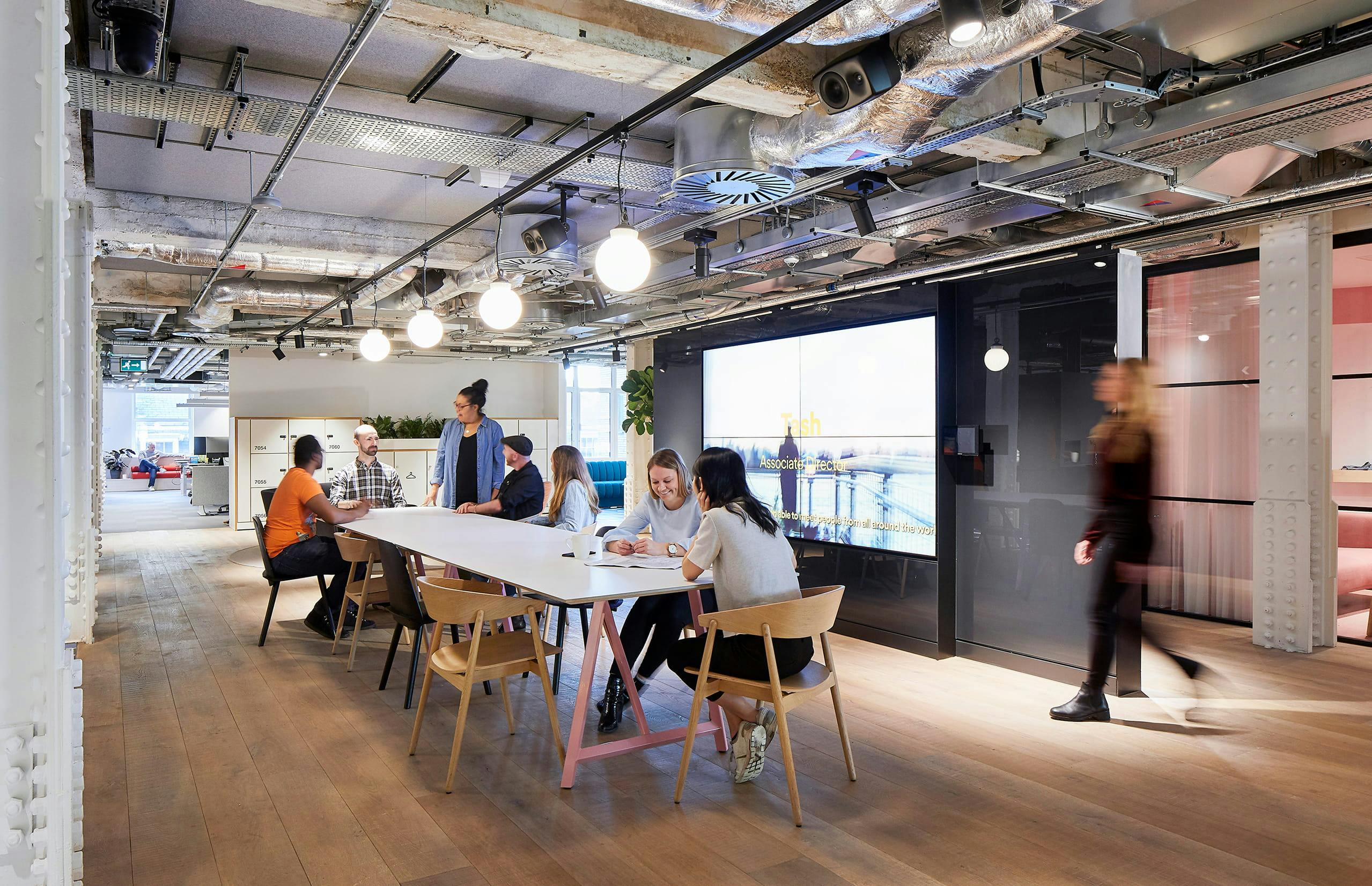
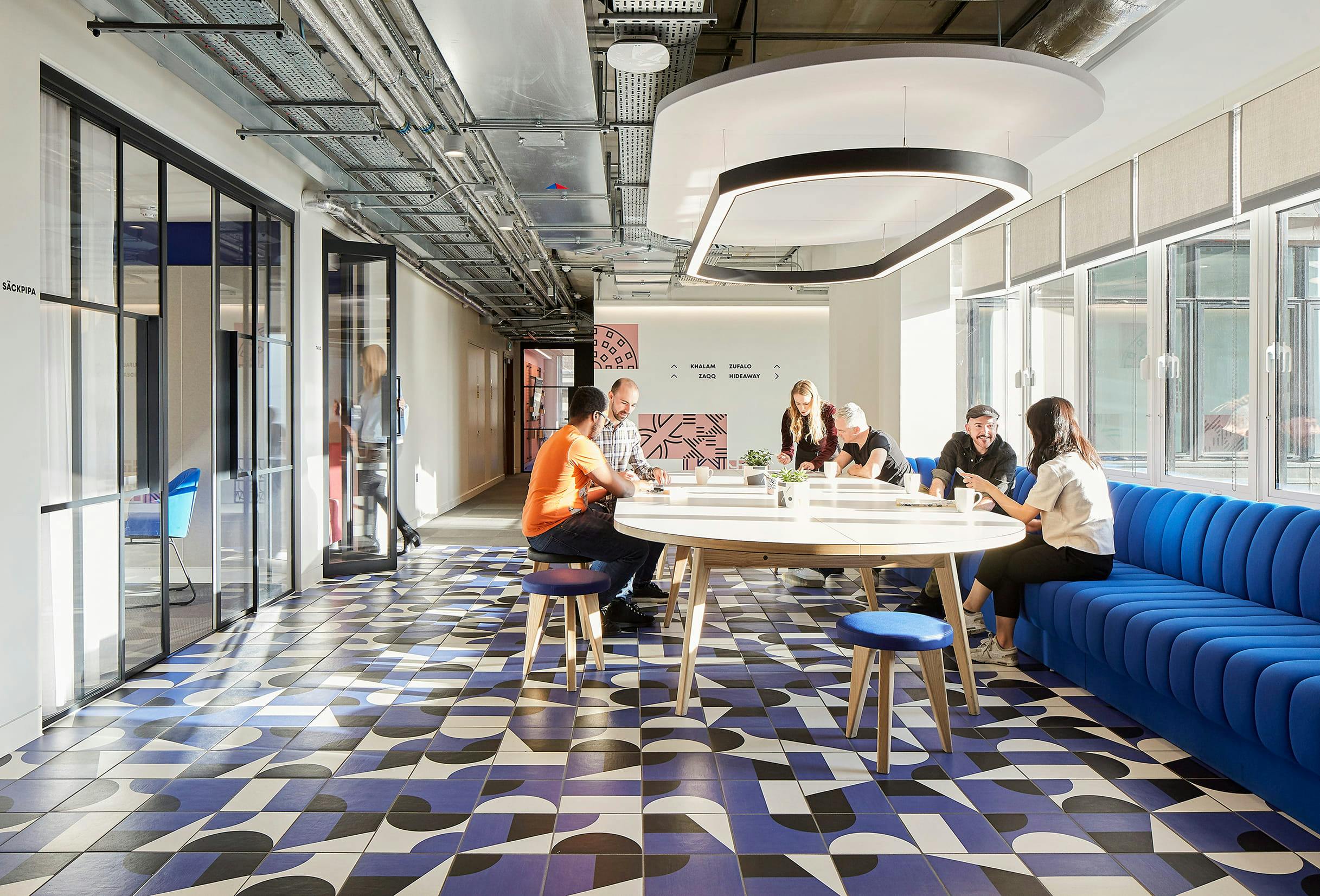
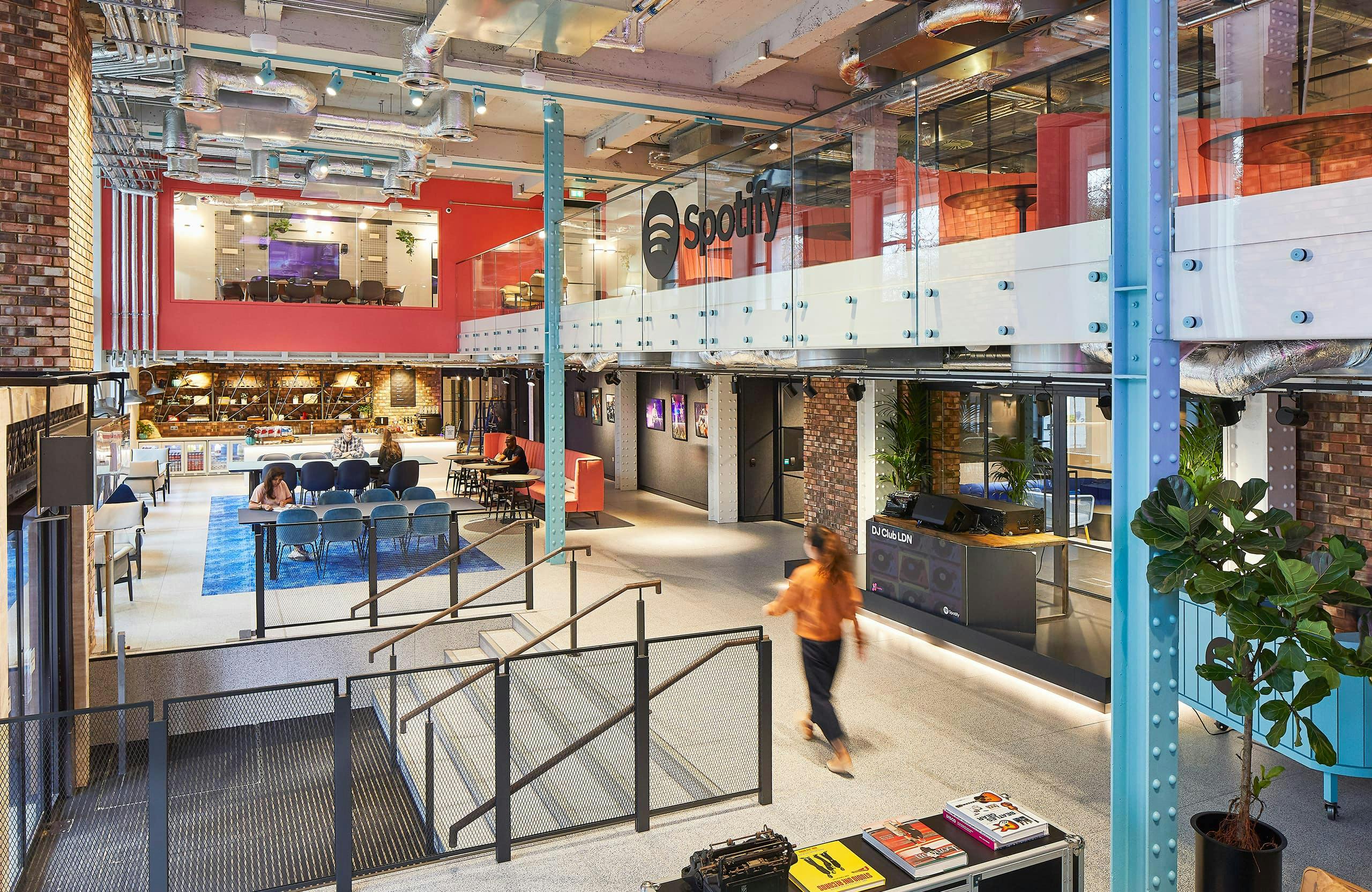
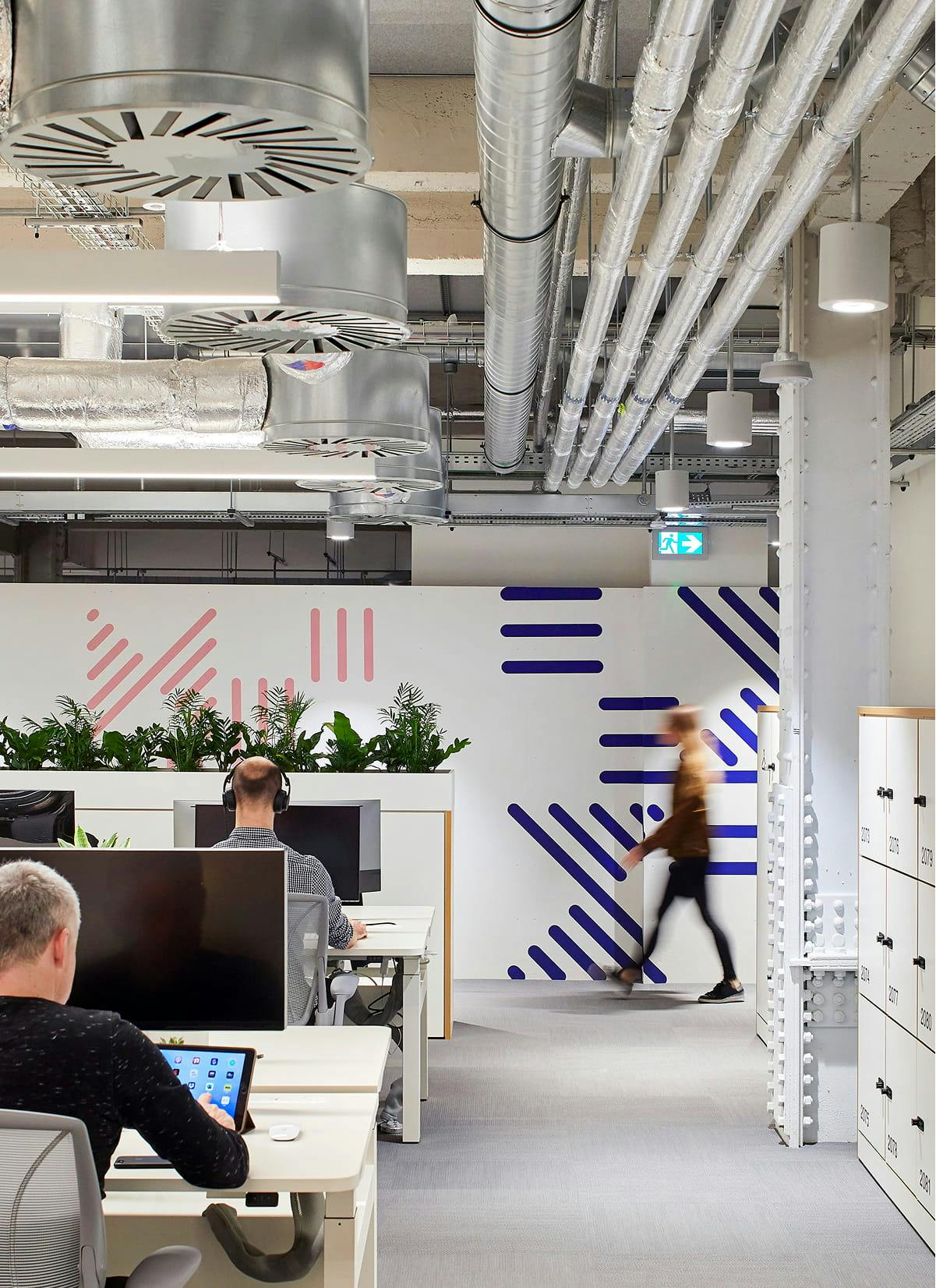
The design harmonises the building’s historic character with contemporary interventions. Original architectural features, such as Art Deco mouldings, riveted steel columns and exposed brickwork are retained and restored, while new elements introduce an ‘industrial deco’ aesthetic that contrasts tougher, raw materials with refined finishes.
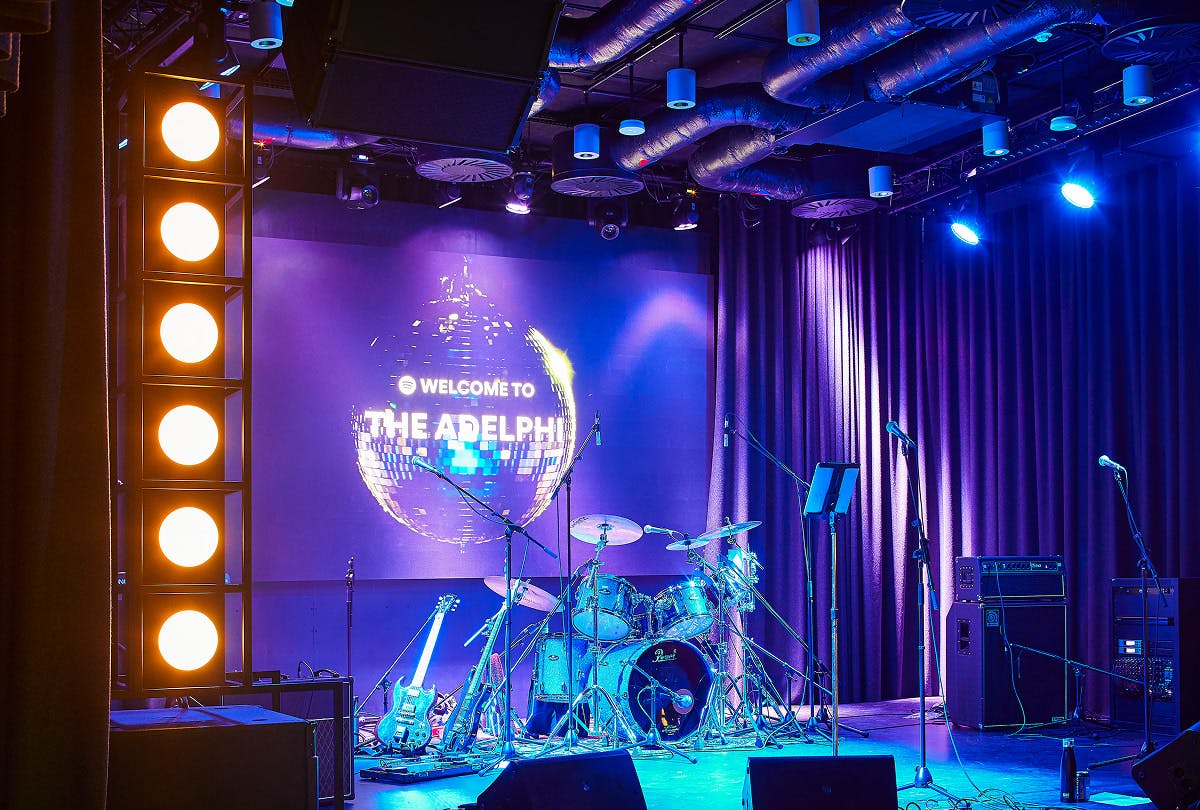
One of the project’s most technically complex additions is Spotify Hall, a 200-capacity live performance venue in the building’s former atrium. Delivering a concert-quality venue inside an occupied listed building required extensive acoustic, structural and spatial coordination. Working with a team of specialists, the design infilled part of the atrium and removed sections of the floor above the stage to improve sightlines and increase seating capacity and the venue was acoustically isolated to ensure performances wouldn’t affect nearby workspaces or neighbouring tenants. During the day, the tiered seating also provides a casual dining and gathering space.
The building’s deep, irregular floorplates presented additional challenges, particularly on the lower two levels, where daylight is limited. Production facilities and technical spaces were concentrated here, enabling workspaces to benefit from light and Thames views higher up.
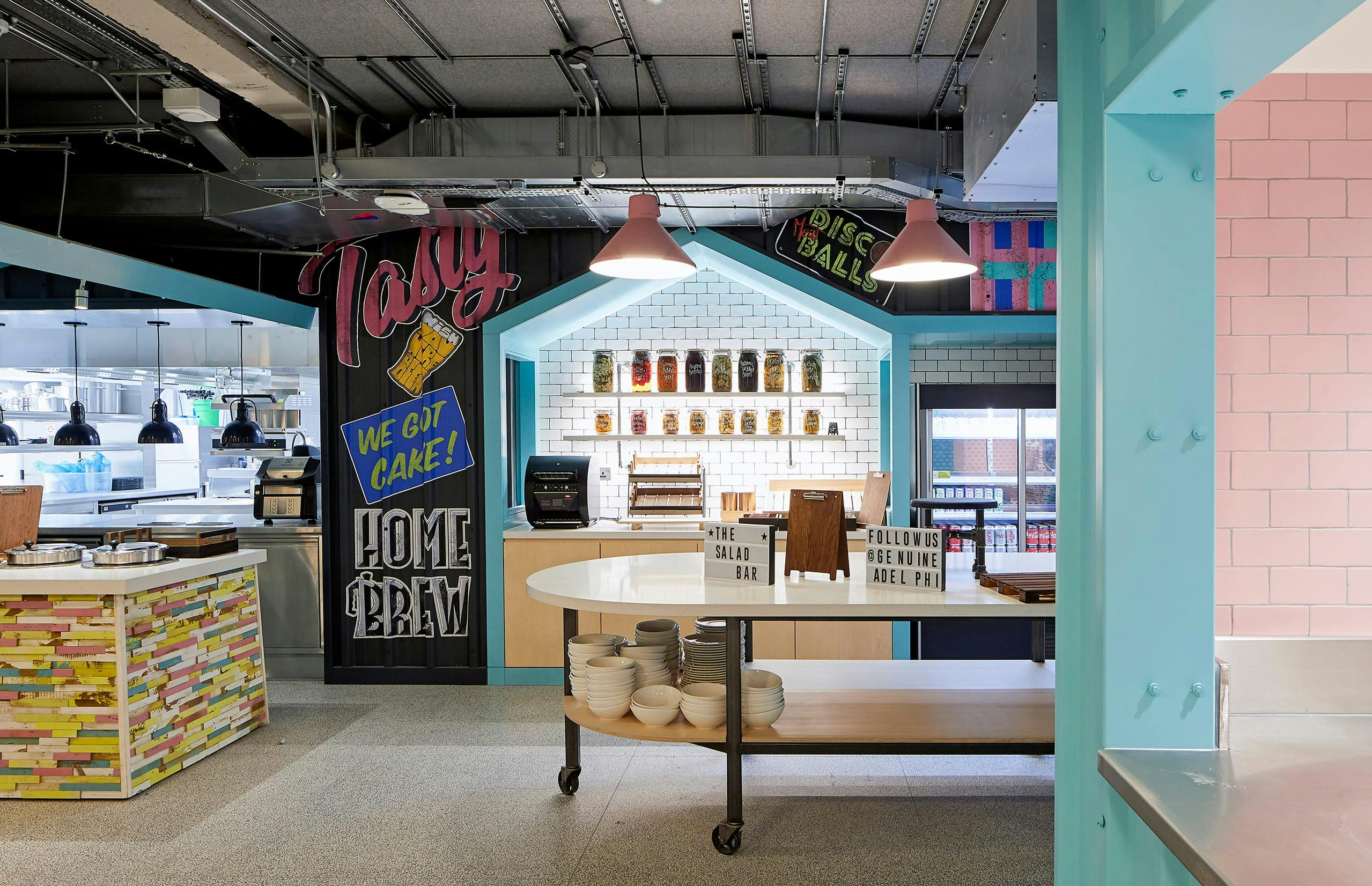
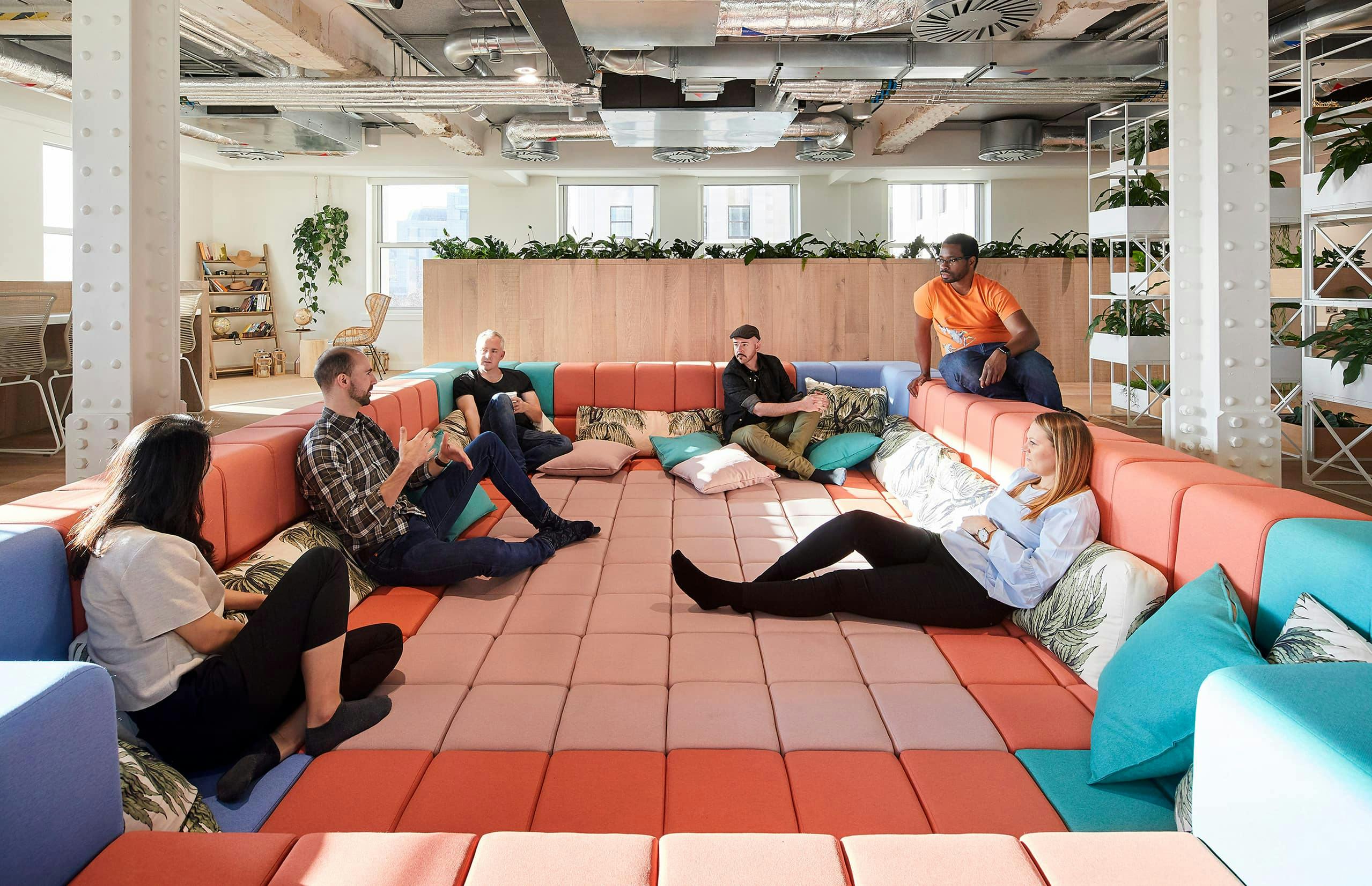
The wide range of specialist facilities reflect Spotify’s creative operations, with podcast and recording studios, listening rooms, rehearsal spaces and UX laboratories. The research and development team spaces on the upper floors are designed for collaborative and flexible working, supported by advanced AV technology, and with ample storage to free the workspace and remove clutter.
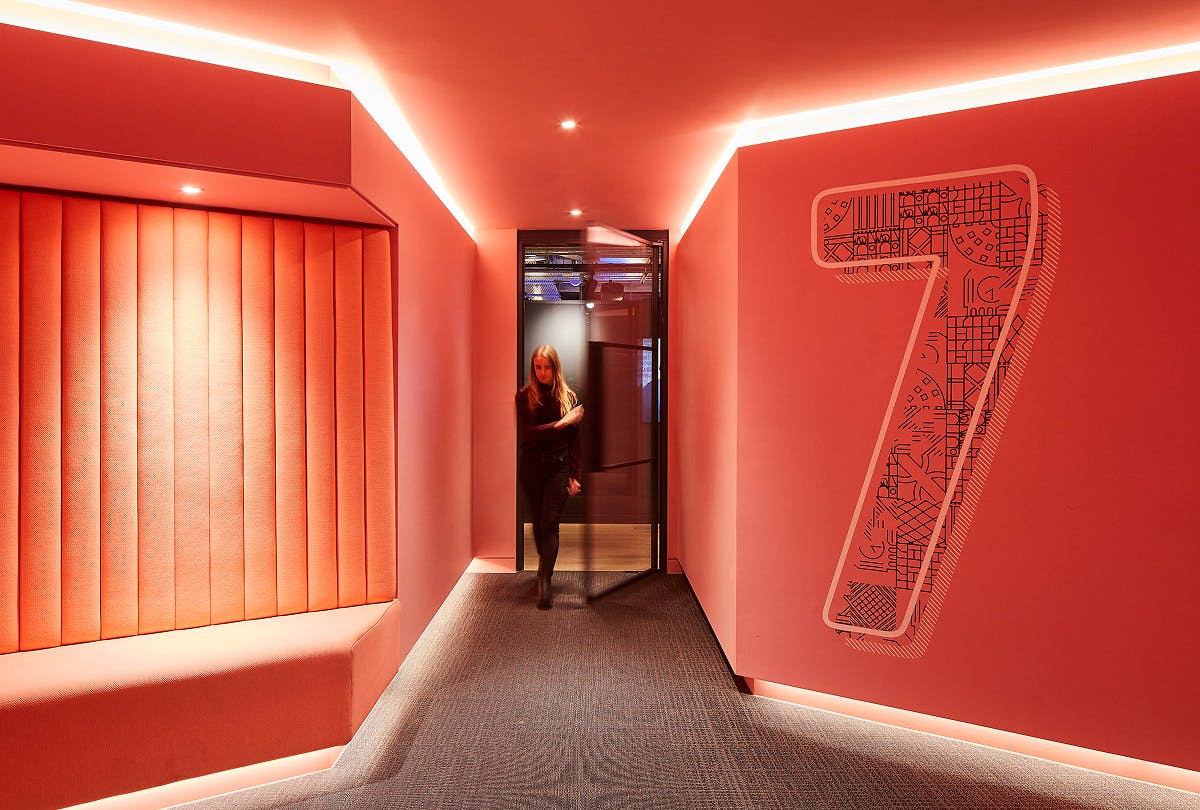
A mezzanine extension on the second floor overlooks reception and the café, making visual and physical connections between arrival spaces and ‘backstage’ working areas. Circulation routes, based on collaborative client workshops, create distinct moments in the experience of the building. Bespoke artwork references London’s culture and music technology and meeting room names, like playlists, classic albums and iconic venues, have been designed to make wayfinding fun and intuitive.
Michelle Wilkie, Director